RostLineLogistic
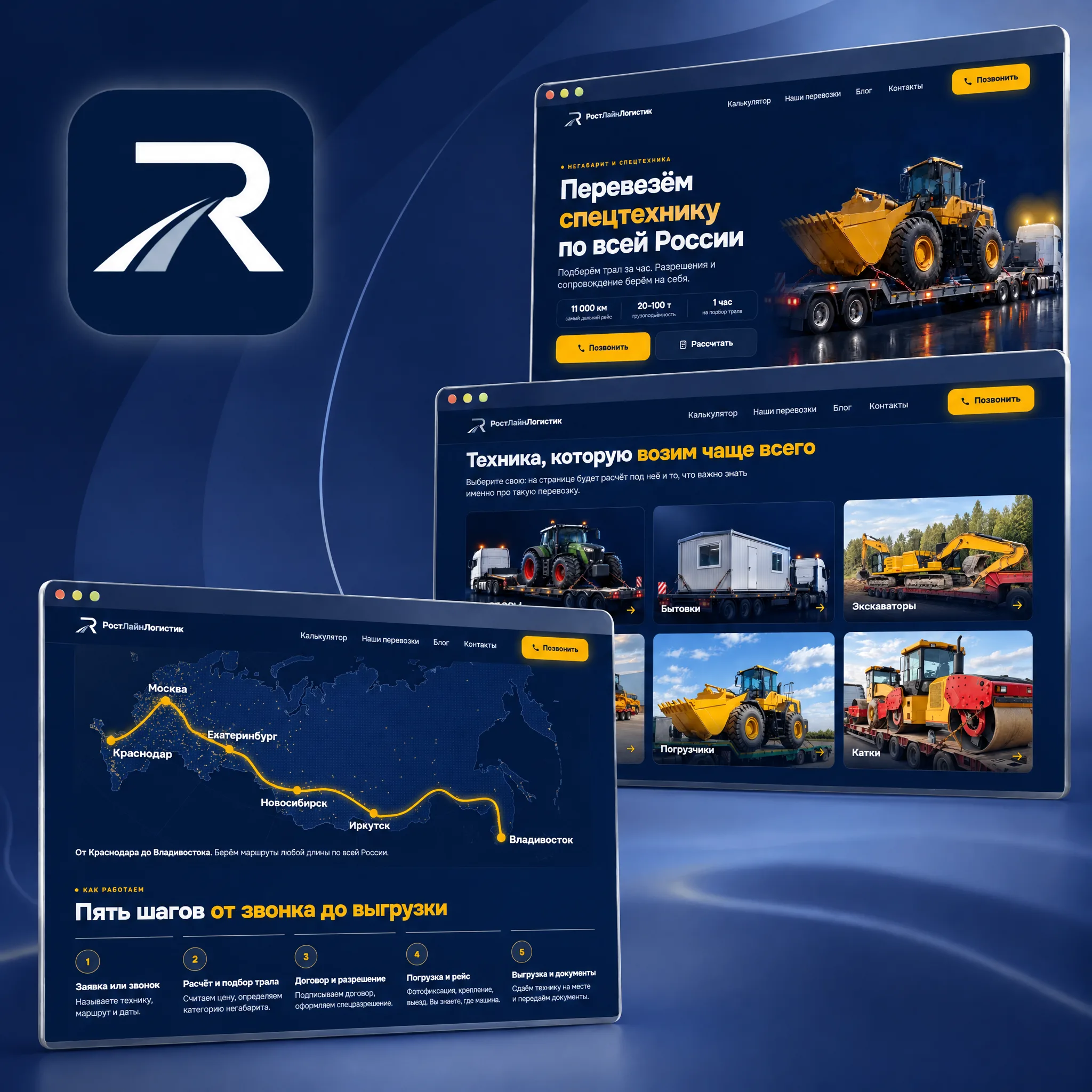
A logistics company website with 12 landing pages, an animated hero, and an oversized freight quote calculator. Visitors select their cargo, enter a route, and receive an estimated price range in three steps. A Payload CMS backend manages rates, content, and leads. The project includes campaign attribution, notification integrations, and technical SEO.
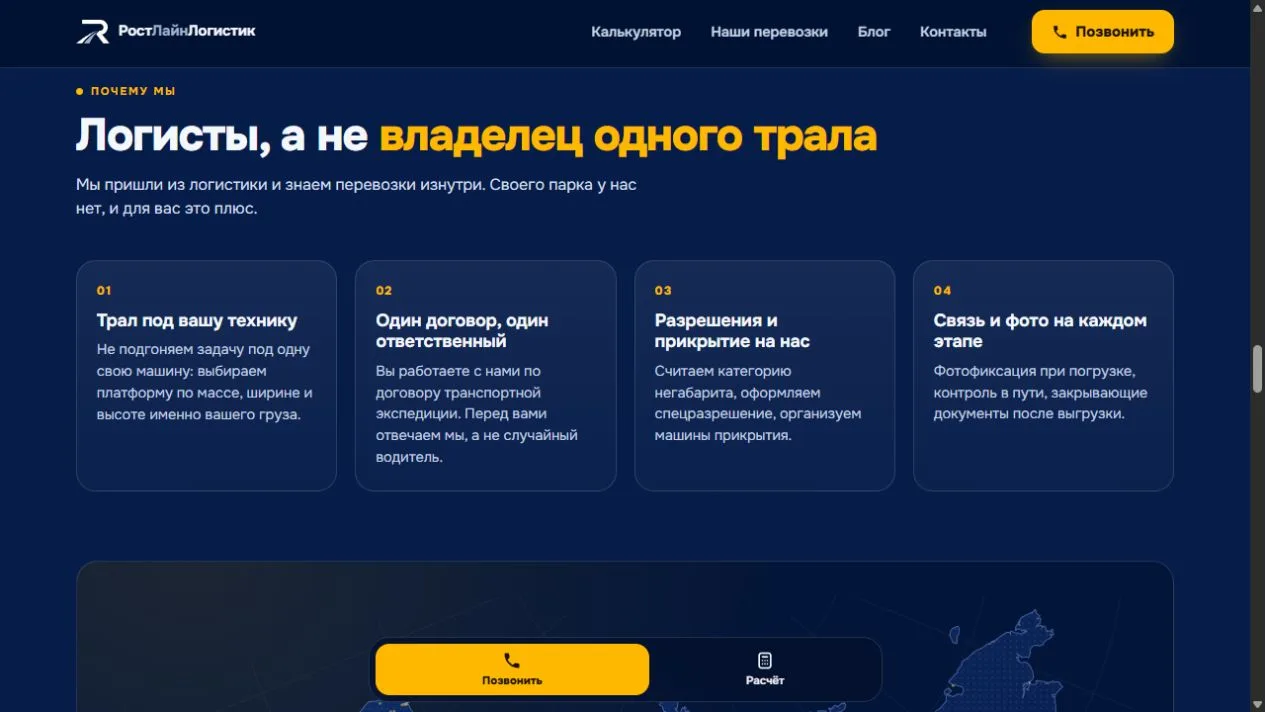
RostLineLogistic arranges the transportation of heavy equipment, oversized loads, and other commercial cargo across Russia. The company operates as a freight forwarder: it selects a carrier and suitable vehicle, coordinates the route, and agrees on the documentation and shipment conditions. We built the website around that service model, explaining how the team approaches a customer's shipment and what information it needs to prepare a quote.
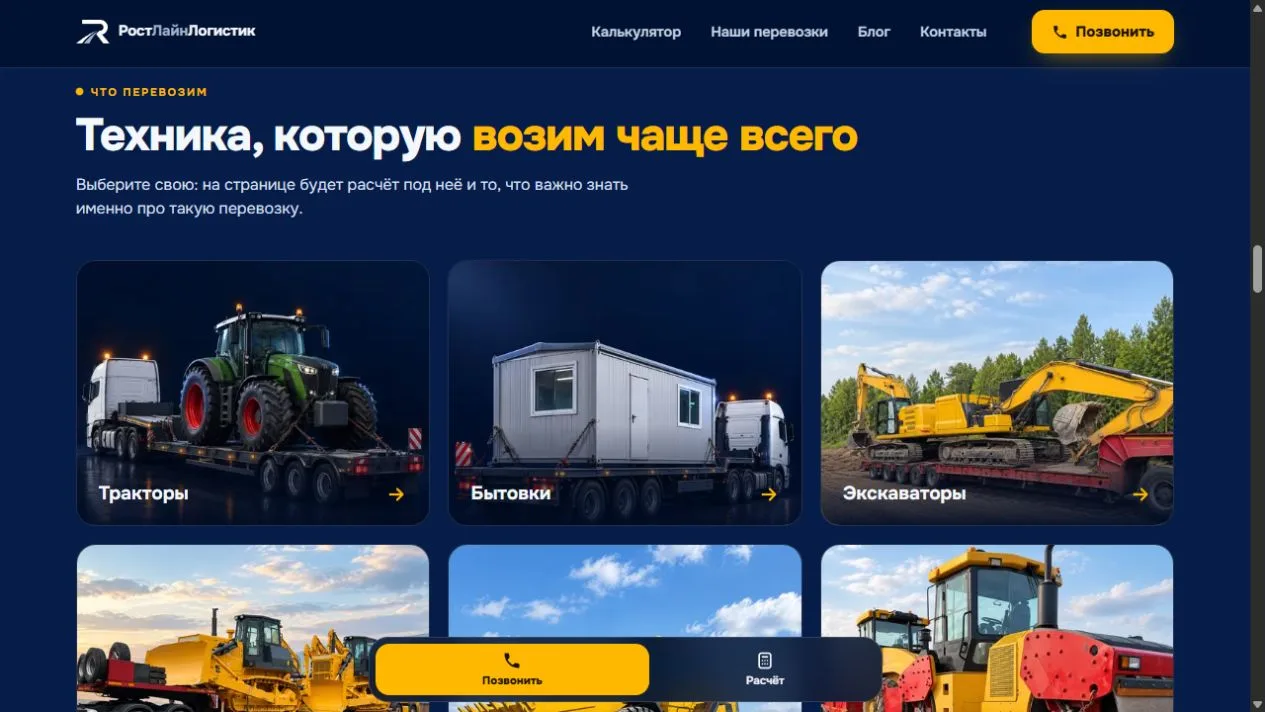
The audience arrives with different tasks. One visitor needs to move an excavator, another is planning the delivery of a storage tank, and another wants a container collected from a port. Each request involves different constraints, including dimensions, loading arrangements, access to the site, or temperature requirements. Our task was to make those differences clear while keeping the route to an enquiry straightforward.
The website also needed to support the team's daily work. Rates, contacts, and equipment options require updates, while incoming enquiries need follow-up. We therefore treated the public website and its management tools as parts of one process, connecting service discovery, an initial estimate, and the information a logistics specialist receives.
Approach
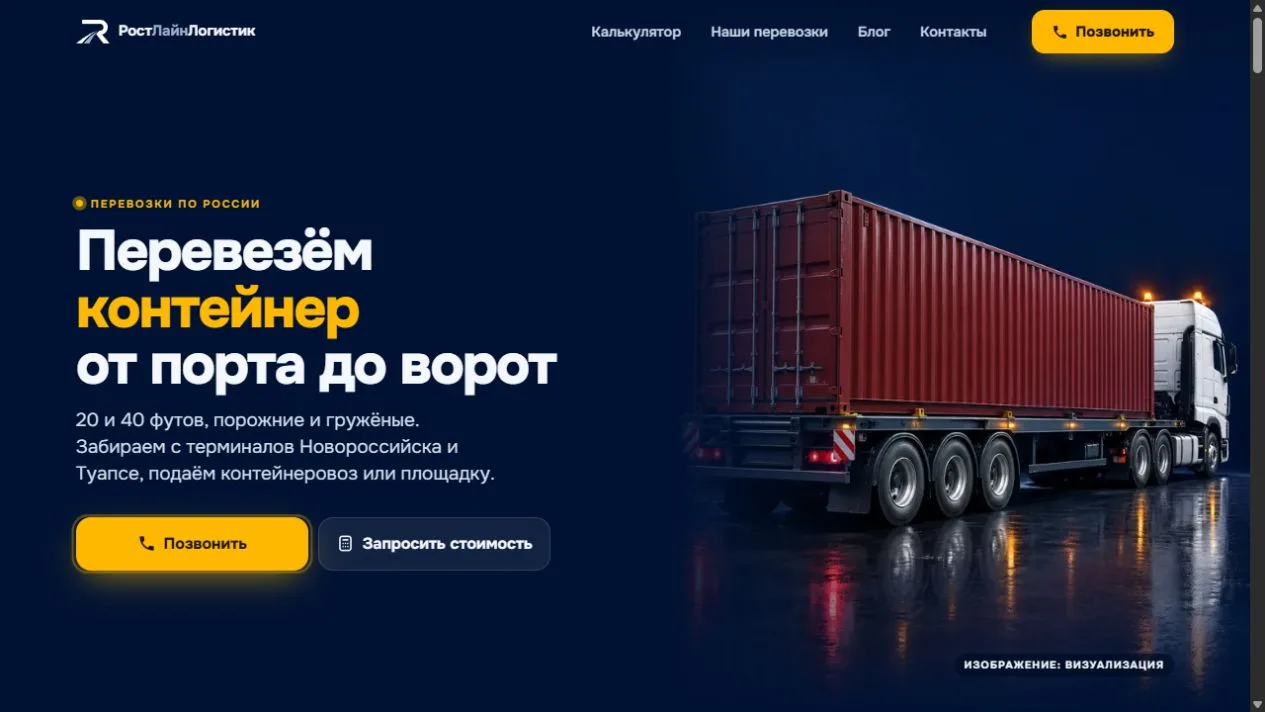
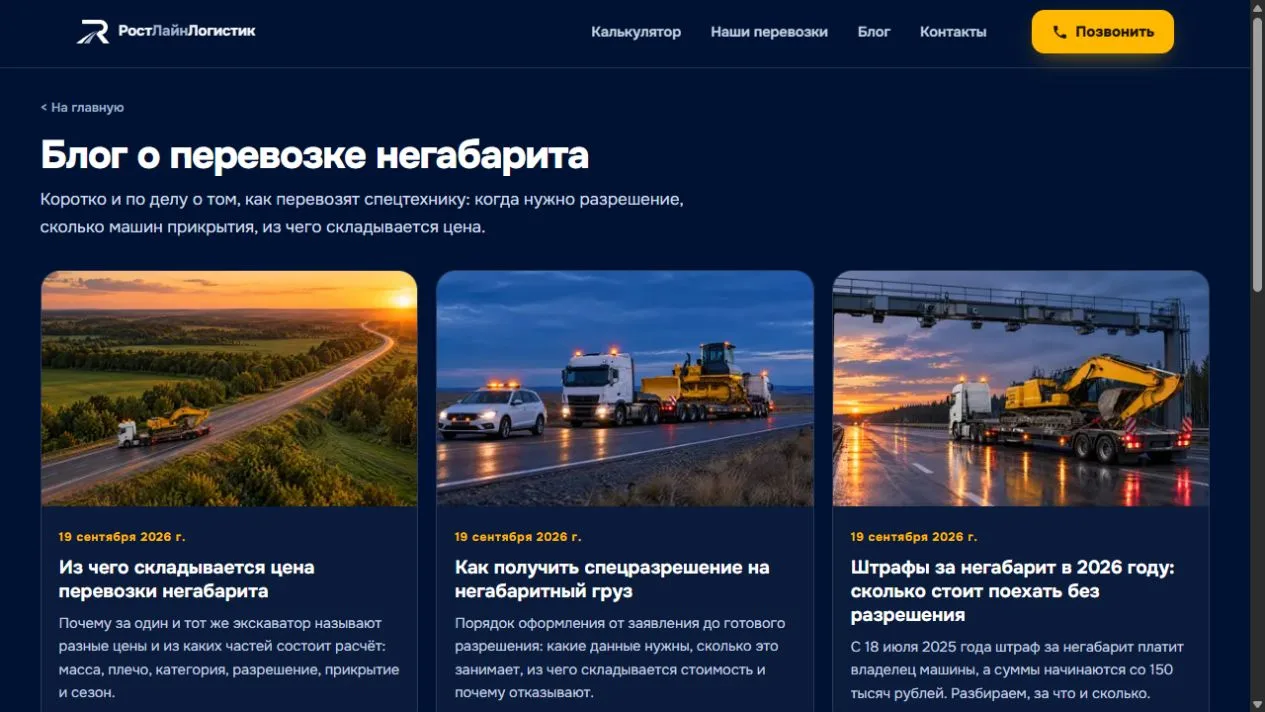
We organised the content into twelve landing pages. Eight cover specific types of equipment and cargo, while four introduce low-loader transport, container haulage, curtain-sided transport, and refrigerated transport. The homepage brings these services together. Company information, contact details, and a blog provide supporting context.
Each landing page addresses the practical questions associated with its cargo. Excavator transport involves weight, track width, and the position of attachments. Storage tanks introduce length, diameter, and securing arrangements. Container shipments involve terminal collection, release documents, and unloading at the destination. We used these distinctions to help visitors prepare useful information before contacting the team.
The pages follow a shared structure, moving from an introduction to the details of the service and then to a calculation or enquiry. The container, curtain-sided, and refrigerated pages include short quote request forms with relevant prompts. Equipment pages use the calculator with the corresponding equipment category already selected.
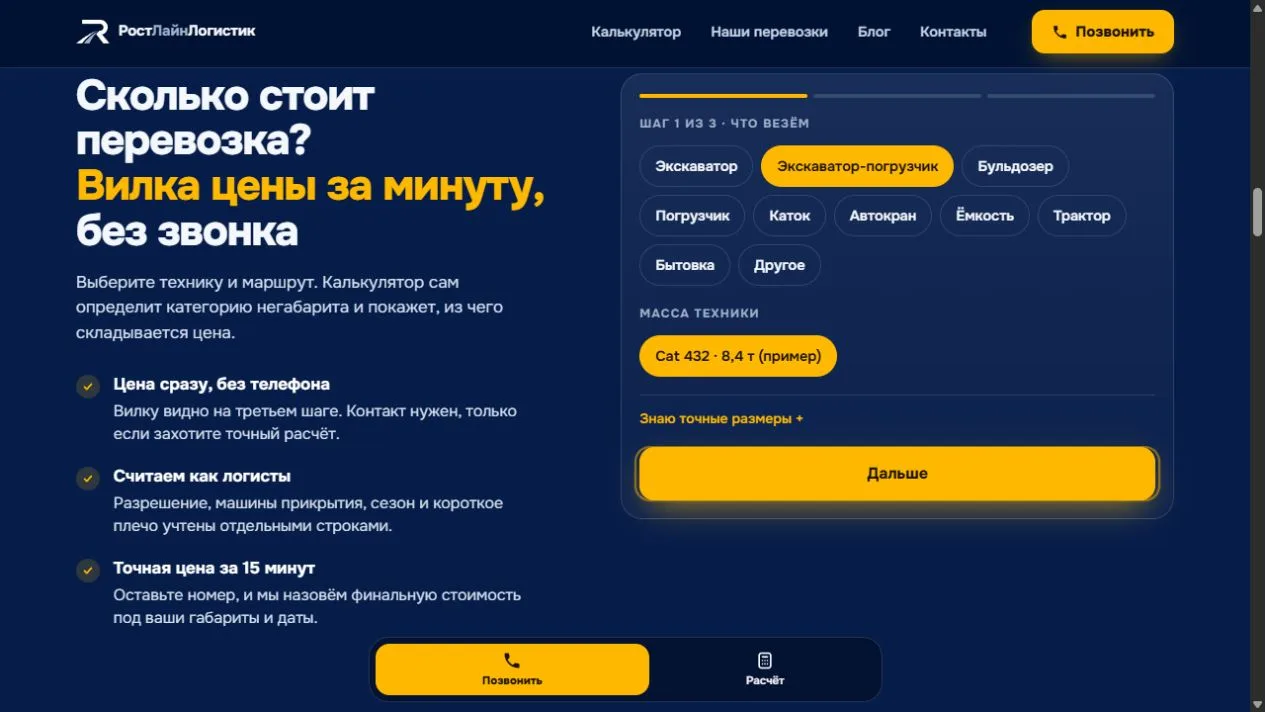
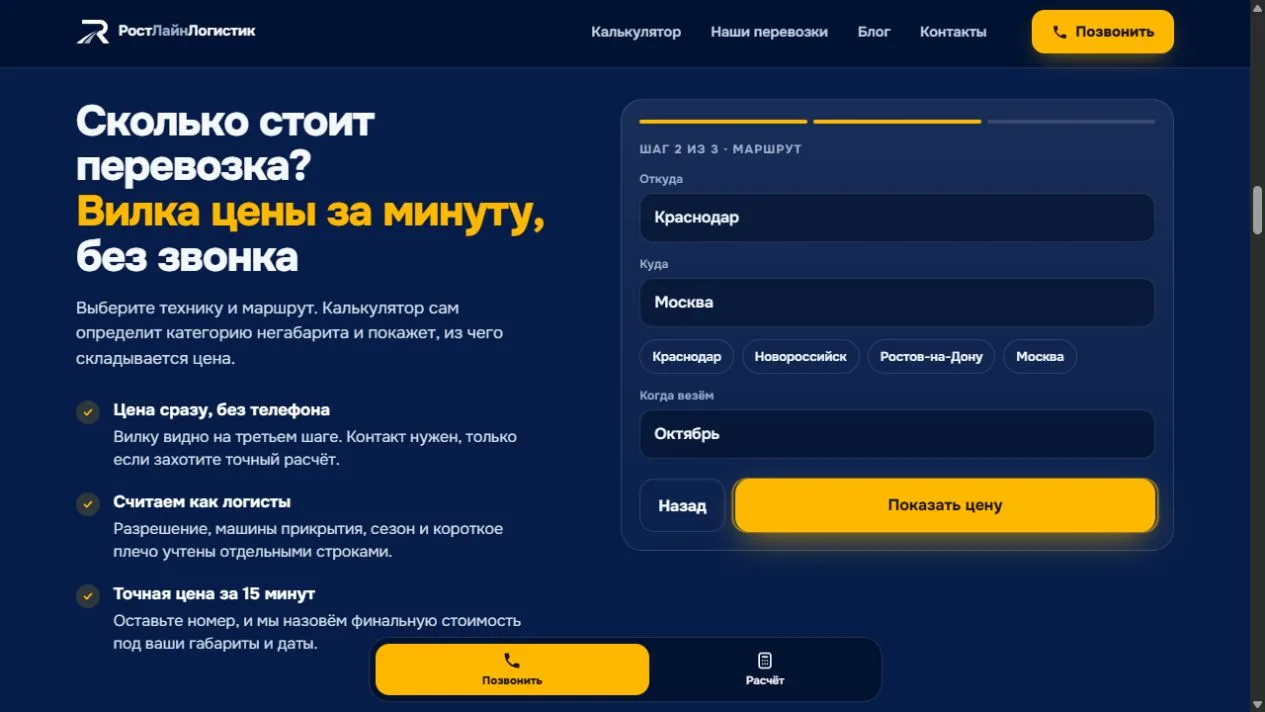
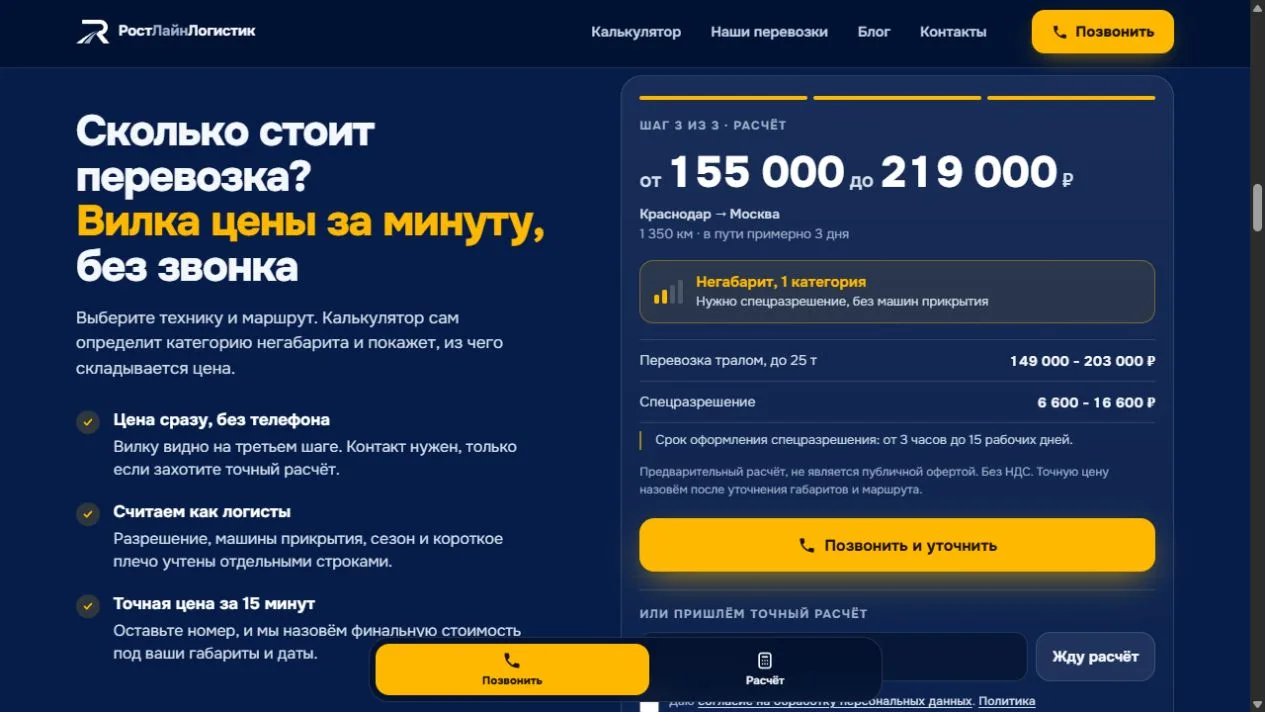
The central interaction is a three-step calculator. Visitors first select the cargo and enter its weight and dimensions. They then choose a route and shipment month. The final step displays an estimated price range and offers a contact form for a more specific quote. There are ten selection options: nine named equipment and cargo types, including a backhoe loader, plus an “Other” option.
Presets provide a starting point, and manual fields allow users to enter the dimensions of their particular machine. The calculation accounts for weight bands, cargo dimensions, distance, seasonality, short journeys, minimum order values, permits, and escort vehicles. Routes requiring individual assessment can be passed to a logistics specialist with the entered details retained.
The calculator provides a preliminary estimate. The final cost depends on the actual dimensions, available transport, loading conditions, and agreed route. A logistics specialist calculates the exact price after reviewing the shipment. We made that distinction part of the experience by presenting a range and inviting the visitor to discuss the specific job.
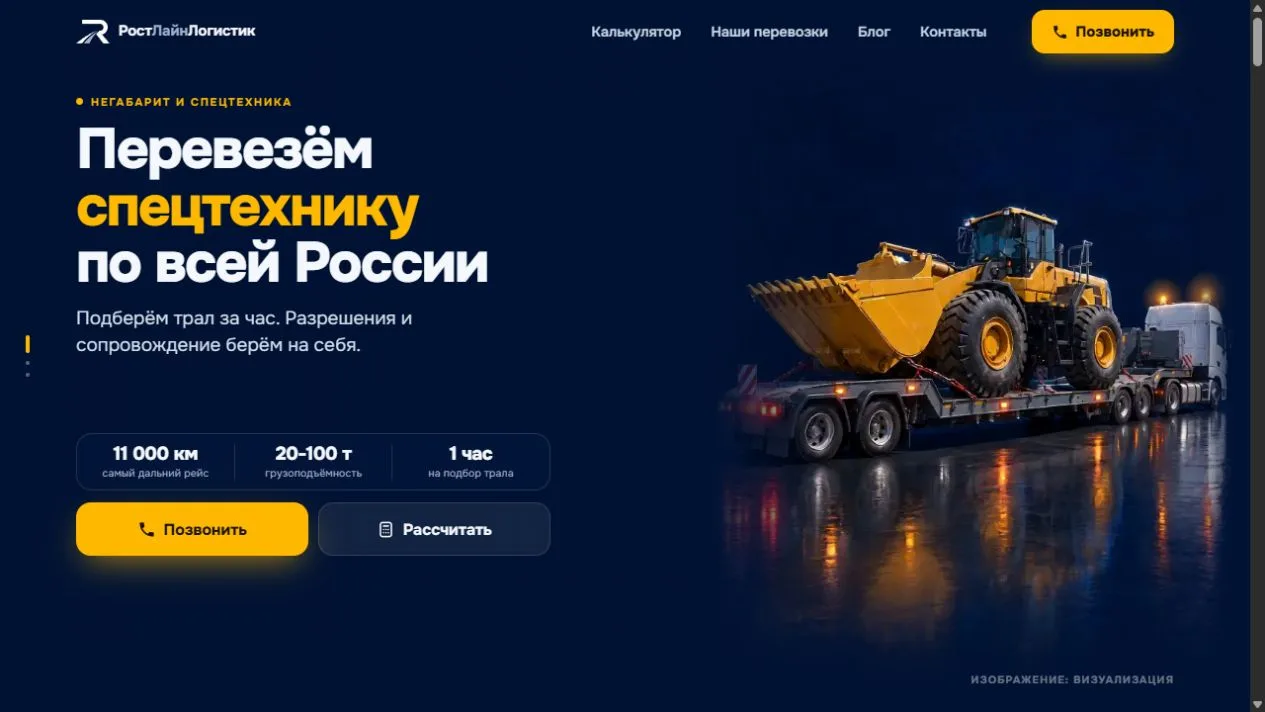
For the visual presentation, we focused on the machinery and the transport process. A scroll-controlled image sequence on the opening screen is combined with graphic overlays explaining cargo dimensions. Lighter image sequences support devices with fewer resources, and the implementation respects reduced-motion preferences. Photographs of shipments and visualisations have distinct roles in the presentation.
We also considered what happens after the enquiry is submitted. The request carries the cargo type, weight, dimensions, route, month, estimated range, and rate version. Campaign parameters and the originating page add source context. This information connects the customer's interaction with the logistics team's follow-up.
Technology
We developed the public website with Astro, TypeScript, and custom CSS. Pages are generated as HTML, with browser-side scripts supporting the calculator, forms, and other interactions. The opening animation uses Canvas and SVG. This approach accommodates content-rich service pages alongside focused interactive features.
The management interface uses Payload CMS, Next.js, React, and PostgreSQL. It provides controls for rates, equipment options, contacts, promotions, media, project examples, and articles. Configuration changes are published for the website and trigger a rebuild of the static version, keeping editable data connected to the public pages.
A separate Node.js intake service validates and stores incoming enquiries before forwarding them to the CMS. A persistent queue and delivery retries handle temporary unavailability of dependent services. Request identifiers help prevent duplicate enquiries when a form submission is repeated.
Within the CMS, we implemented enquiry statuses, staff assignment, notes, activity history, and follow-up controls. Role-based access defines what team members can view and change. Notification integrations are available for Telegram, MAX, and email, with delivery depending on the configured channels and recipients.
The analytics implementation includes Yandex Metrica integration, calculator and form events, contact-click tracking, and campaign attribution. The system also supports offline conversion reporting following deal-status changes. Technical SEO includes canonical URLs, a sitemap, robots directives, Open Graph metadata, and structured data. Docker Compose, nginx, and Caddy support deployment, alongside service health checks, atomic website publication, and encrypted backups.
Outcome
We delivered a website that connects service information, preliminary estimates, and enquiry handling through shared data. Twelve landing pages address distinct transport scenarios. The three-step calculator gives visitors a way to describe a shipment and explore an estimated budget, with ten cargo selection options covering named categories and a manual “Other” scenario.
The company's team can manage rates and equipment presets through the CMS, together with contacts, promotions, and website content. Enquiries retain the context of the calculation, allowing the internal workflow to continue the process started on the public website.
The outcome is a set of implemented tools and a complete enquiry journey. Visitors can find a relevant service, enter shipment details, obtain an initial estimate, and submit a request. Logistics specialists receive the supporting information and tools for follow-up, while the company has a foundation for developing its content, analytics, and sales workflow.